Our Land
Projects
Black Hills Regeneration
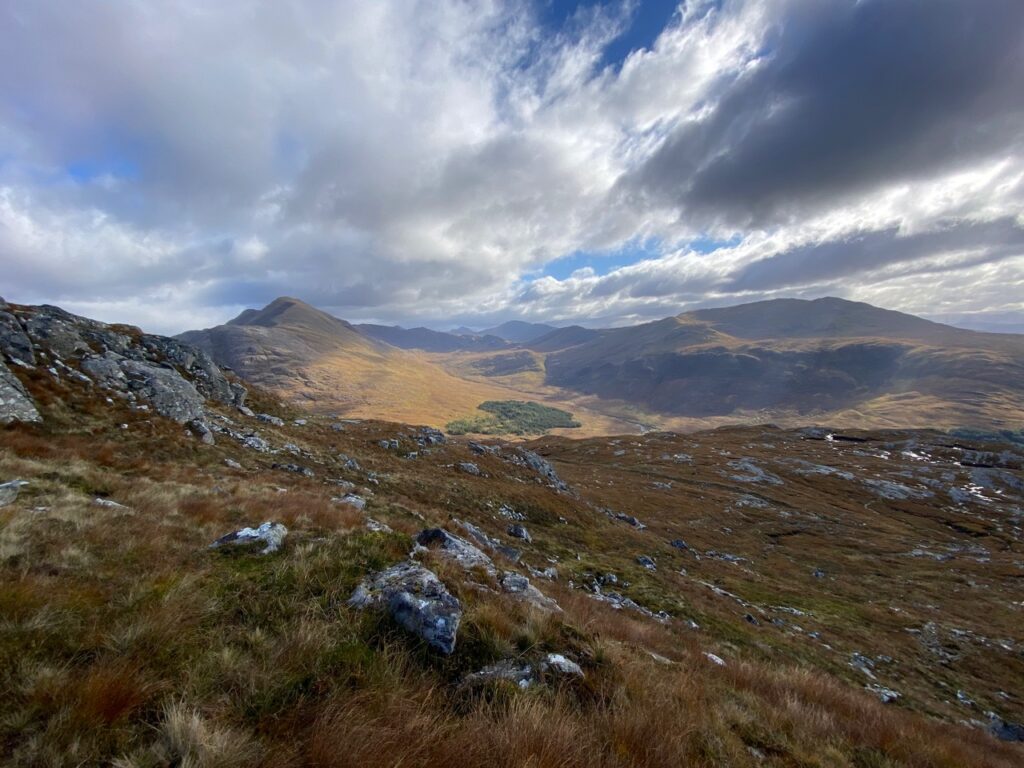
Building on previous achievements and taking advantage of NatureScot’s Nature Restoration Fund, the £250,000 project set out to facilitate the regeneration of habitats and species on a landscape scale across the western range of the Knoydart Peninsula, to bring about enriched biodiversity from seashore to mountain tops. The NRF project ran from July 2022 to March 2024, with deer management, fence maintenance, woodland establishment and environmental monitoring ongoing.
The project linked up and repaired existing deer fences, enabling deer in the Black Hills to now be managed separately from the wider peninsula. The deer density within the 3000-hectare project area has been reduced to a very low level, allowing woodland establishment and regeneration without the need for any more individual fences. Deer outside the project area are still being managed responsibly, guided by herbivore impact assessment.
Effective partnership working between Knoydart Foundation, Knoydart Forest Trust, Inverguseran Farm, Airor Common Grazings and several other individual landowners has been key to the project success.
The project comprised five main elements:
- A strategic deer fence comprising new link fences and repairs to existing fences.
- A deer reduction cull within and adjacent to the project area.
- Herbivore Impact Assessment surveys.
- Development of woodland regeneration and creation plans.
- Community engagement.
The Knoydart Credit – A Partnership of Nature and Community
The project took place in 2024 & 2025 and was funded by the National Lottery Heritage Fund. It set out to investigate the potential for a place-based natural & social capital credit which would enable direct investment in the restoration of Knoydart’s natural habitats and the regeneration of our community.
KF worked in partnership with KFT, and along with specialist support from Trees for Life and Zulu Ecosystems, and the local community to develop mechanisms and methodologies to evidence impact in carbon, biodiversity and community benefit. The new Land Management Plan & Wild Trees Survey are significant project outputs.
The project looked into ways that communities can maximise the benefits of restoring the nature around them, and how to most efficiently measure the social aspects. It has demonstrated that empowered communities taking the lead on local land restoration projects could potentially achieve the highest value for that work, bringing the maximum level of benefit back into the community.
Wild Trees Survey
As part of the Knoydart Credit project, this survey was led by Trees for Life and supported by a corporate funder of theirs, as well as Highlands & Islands Environment Forum. It covered 8,500 hectares of land owned by KF, Inverguiserain Farm, and Black Hills neighbours, using 1396 plots and 248 transects. It was carried out by TfL ecologists and trained local community members in summer 2025.
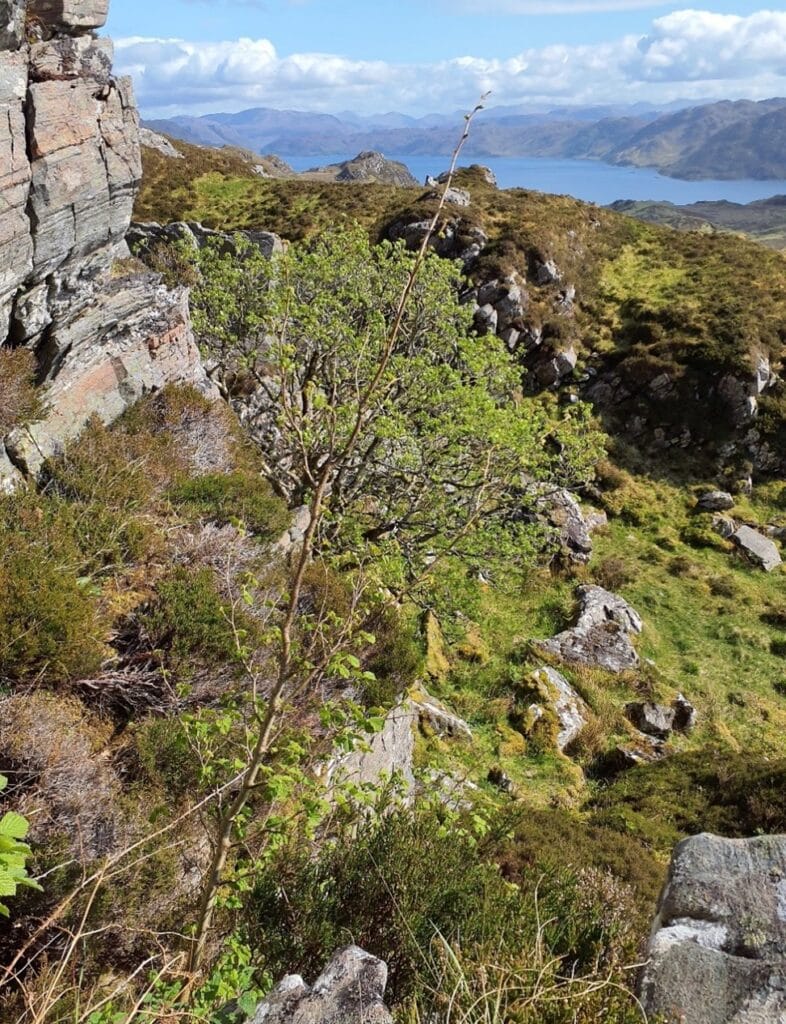
240 hectares of Ancient Woodland were mapped and 21 key refuges for wild trees and refugial species identified. Total diversity was found to be high but concentrated in small, relatively inaccessible hotspots that were widely distributed across the landscape.
The main threat and barrier to recovery was found to be levels of herbivore impact, which were high or greater across 49% of the survey area. Invasive non-native species were considered a secondary threat and concentrated around Inverie.
The potential for recovery is high though, with significant scope for natural regeneration and expansion of woodland: an estimated 1.5 million native trees and shrubs could establish naturally based on existing seedling densities, expanding tree cover by over 2000 hectares.
Peatland Restoration
Up to 1000 hectares of KF land has been identified as peatland and over 600 hectares of that land is thought to be suitable for restoration. This work mainly involves blocking drains and reprofiling/revegetating eroding peat hags, to return the habitat from a degraded state which is emitting carbon, back to a fully functioning ecosystem which locks away more carbon every year.
Zulu Ecosystems develop and implement peatland restoration projects for landowners nationally, often using income from carbon credit sales to fund shortfalls from other funding sources. Initially working to baseline the community land carbon resource as part of the Knoydart Credit Project, they proposed to manage for us a phased approach to restoring our peatlands. This builds on the previous 2018 surveys and report with wider and more detailed surveys, and project development to enable applications for funding to NatureScot’s Peatland Action fund.
We hope to have funding in place for Phase 1 implementation work to start on the ground from summer 2026. At the same time survey work has been completed for Phase 2, with project design and development underway to enable a subsequent Peatland Action application.
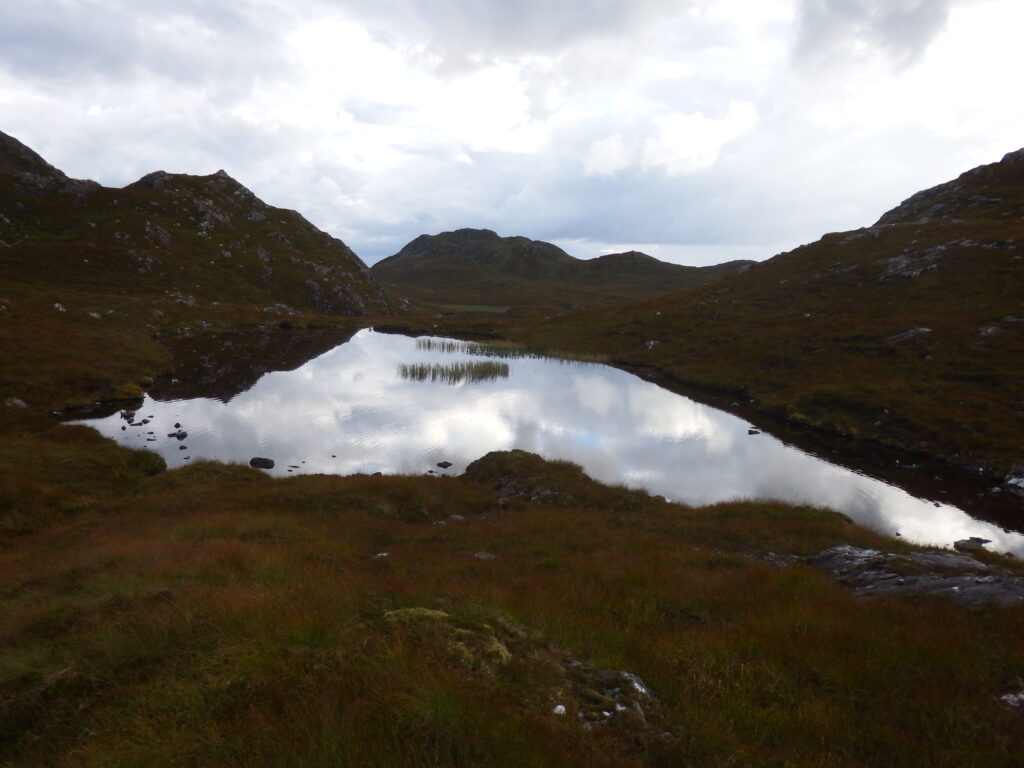
Regenerating Knoydart’s Landscape
As part of the Scottish Biodiversity Strategy vision of restoring nature across Scotland by 2045, NatureScot has identified 9 landscape scale exemplar projects.
Our ‘Regenerating Knoydart’s Landscape’ project has been selected as one of these. At this stage it is an informal partnership between KF, KFT, John Muir Trust and Barisdale Estate, but is open to engaging with all landowners and other stakeholders on the peninsula. Its focus is to expand on our 26 years of land management work to regenerate habitats with a focus on community benefits and sustainability, such as the Black Hills Regeneration project and rhodendron ponticum eradication. We have been grouped together with similar projects at Arkaig and Morvern under the banner of ‘West coast rainforest and pinewoods’.
The purpose of the exemplar projects is to demonstrate new ways to accelerate and scale up nature restoration on the ground, building on the experience of earlier initiatives and achievements. Scottish government agencies will prioritise staff time to engage in the project and maximise the use of existing funding streams to support delivery of nature restoration in the area.
More information is available on the NatureScot website here.