
The Power
Of Knoydart
Clean green hydro power for our community

Who are Knoydart Renewables Ltd?
Knoydart is not connected to the UK National Grid electrical network.
Knoydart Renewables Limited (KRL) is a wholly-owned but independently-managed subsidiary trading company of the Knoydart Foundation. Other than some small run-of-burn micro schemes in outlying communities, KRL is responsible for managing and maintaining all aspects of electricity generation and supply around Inverie Bay; a challenging undertaking with all the demands of a large electricity company but with a very small customer base to share in its operating expenses and capital expenditure.
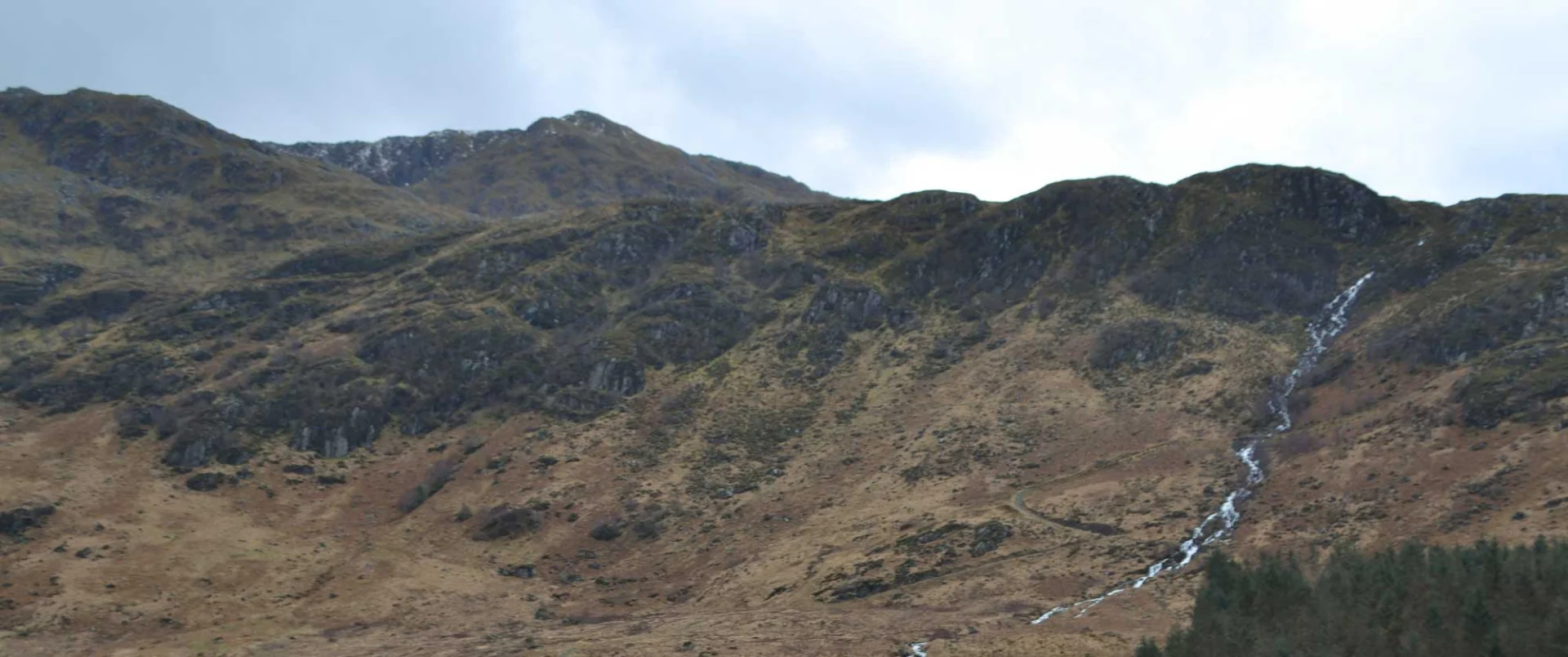
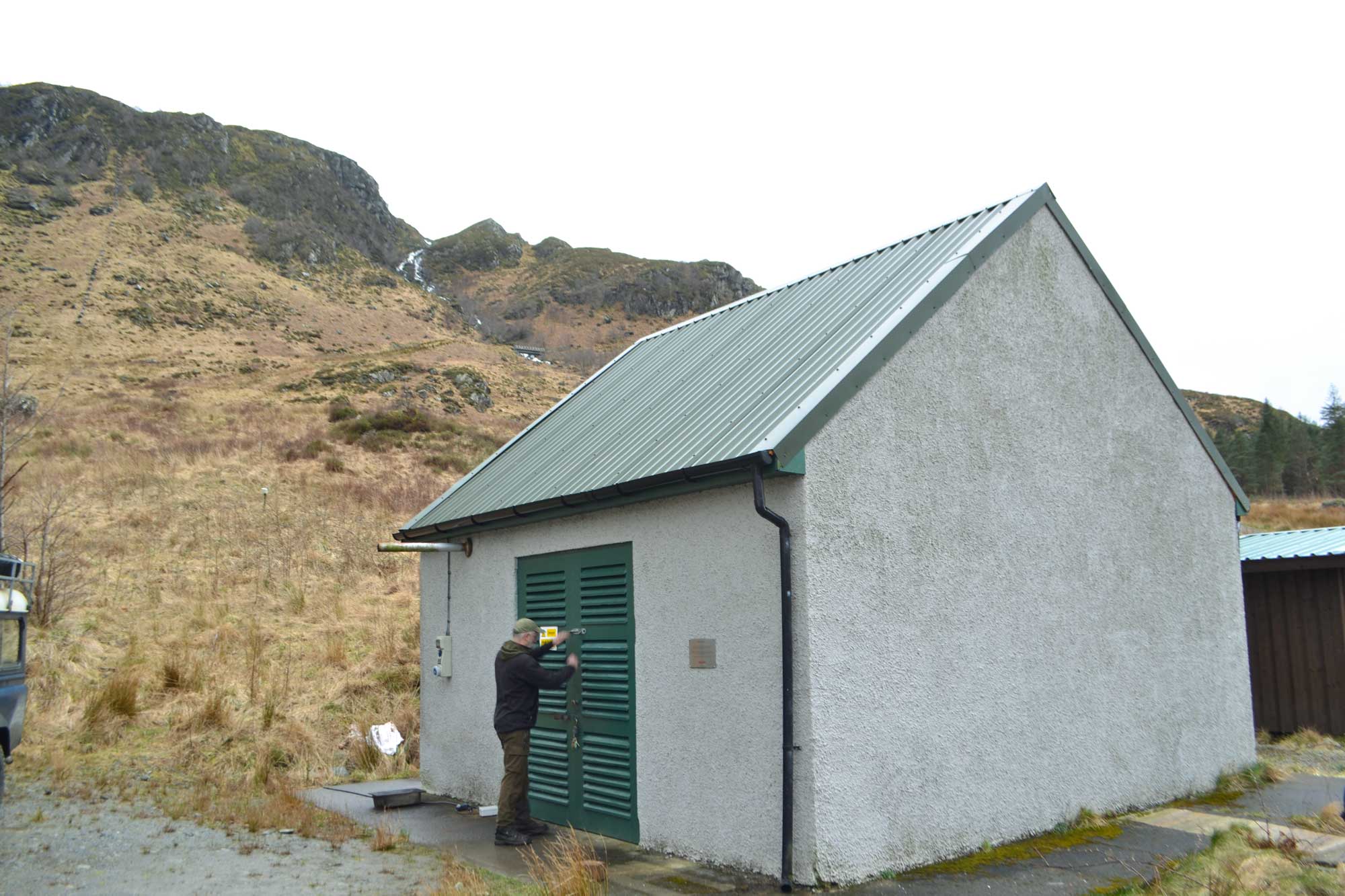
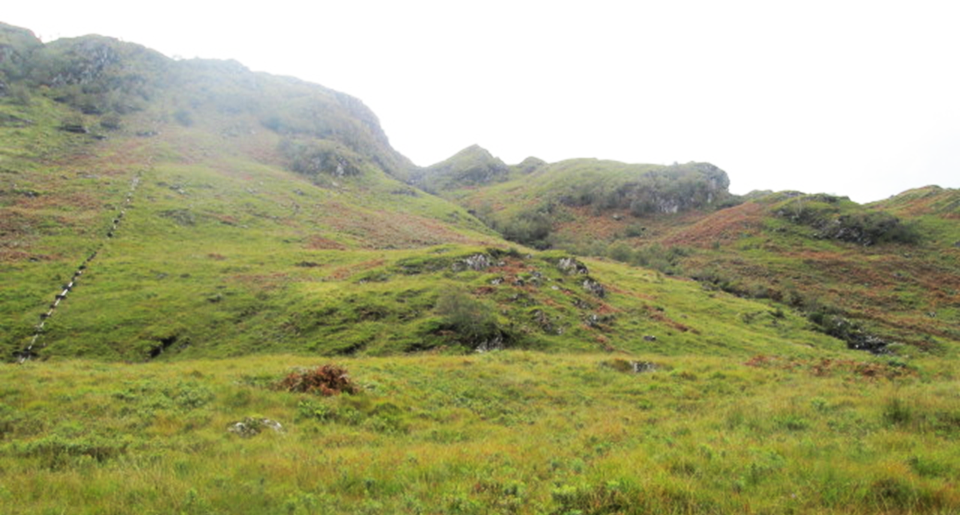
KRL generates, transmits, distributes and sells electricity to approximately 100 domestic and business properties on Knoydart via a ‘microgrid’ from a single 300 kW hydro-turbine supported by 2 x 100 kW diesel back-up generators. The hydro-turbine is dependent on the potential energy stored in Loch Bhraomisaig, more than 300 m up the flanks of Bheinn Budhie, delivered to the KRL turbine house at the foot of the mountain via a buried 400 mm diameter penstock (or pipeline).
The original hydro scheme that powered the community was installed in the late 1970s by the then private landowner. Prior to this, the community first received electricity from a diesel generator in the 1950s. The hydro scheme, as well as the transmission and distribution system, was transferred to community ownership in 2001, by which time it had fallen into a dilapidated state. In the past 20 years there has been a significant development of the energy system under community ownership. This development has allowed new businesses to establish on Knoydart, catering for the growing tourism industry and land management activities.
KRL is governed by a board of volunteer community directors. The day-to-day operations are conducted by a dedicated local team, supported by a wider network of consultants and contractors located throughout Scotland.
On Knoydart, Kyle Smith, through his company Energy Mutual, is KRL Operations Manager and Jim Brown is KRL Maintenance Manager. He is ably assisted by Willie Dowlen, Uilleam O’Neill and Board director John Cocker. Jim Wilson provides high voltage (HV) and grid support through Donfield Consulting and Ed Carrick provides civil engineering support. Corinna Calder, who runs Knoydart Foundation operations, handles back-office functions. The Chair of KRL provides an unpaid hands-on co-ordination and support roll, working with the Operations Manager on overall budget management and strategic planning, assisted by the board directors and consultants.

Current Electricity
Generation
How we distribute
Electricity
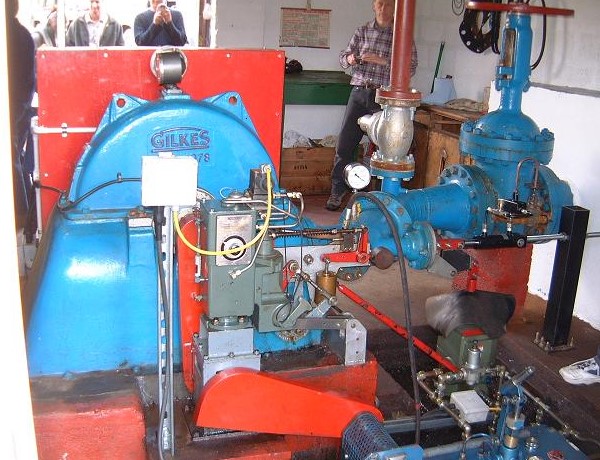
Starting 330 m high up on the flank of Beinn Bhuidhe, towering 855 metres above Kilchoan to the east of the River Inverie, lies Loch Bhraomisaig, which is dammed and provides an estimated storage capacity of at least 74 MWh. Delivered through a 1.5 km, 400 mm diameter buried ‘penstock’, or pipeline, water with a flow of around 100 litres/second powers a nominal 300 kW hydro-turbine and generator (backed up by two x 100 kW diesel generators in Inverie village). Electricity is transmitted and distributed to the community around Inverie Bay through a microgrid of 7 km of 11 kV, 3-phase electricity cable, via 85 poles and 15 transformers, leading to the metering and billing of nearly 90 connected properties and businesses, serving over 120 residents.
Since 2015, KRL has refurbished the Loch Braomisaig dam and replaced the previous old 1970s metal penstock sections through the dam with the larger diameter buried pipes now in place.
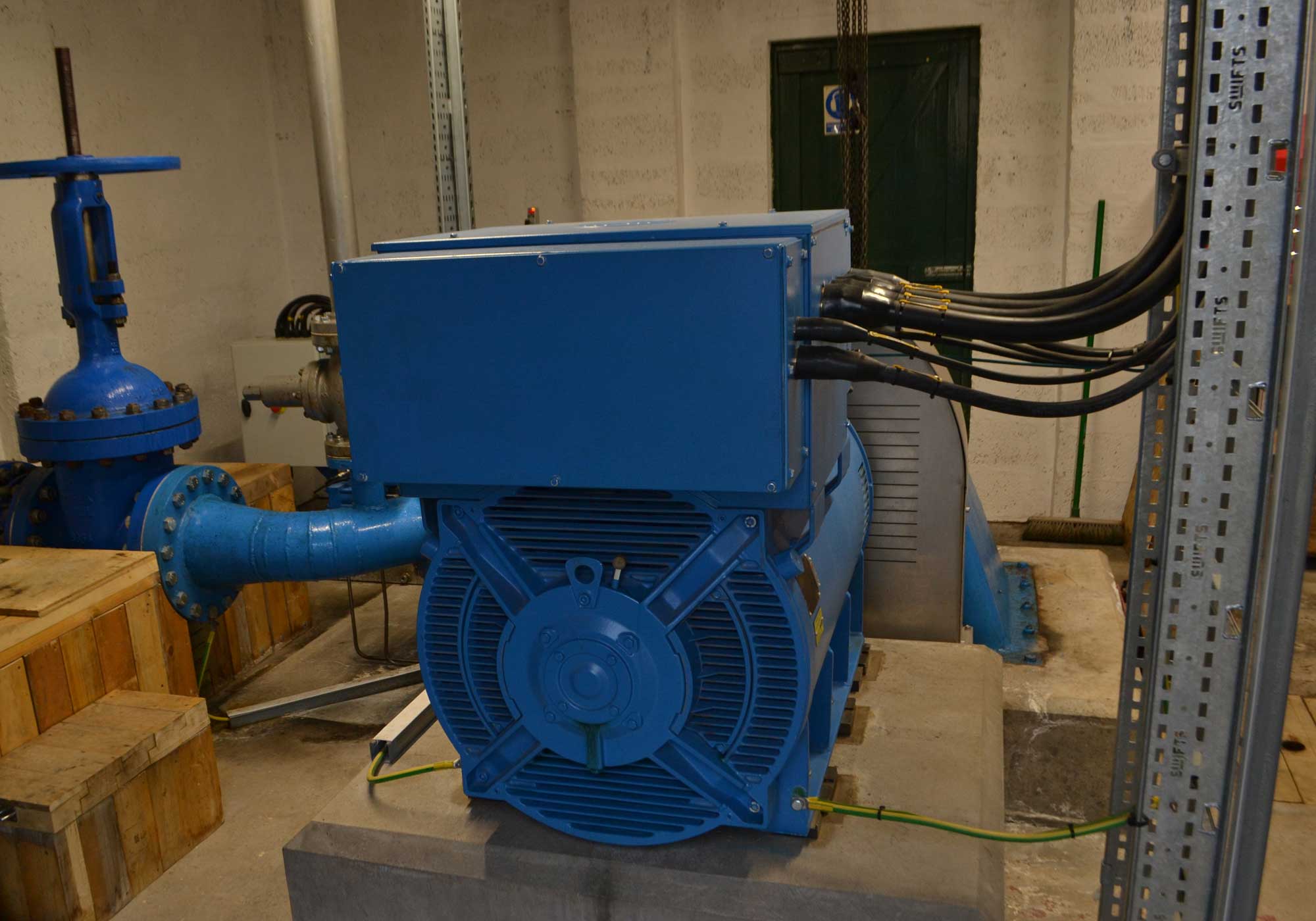
By 2023 the whole 1.5 km penstock has been replaced and buried, a new generator installed, the turbine modernised, and new control panels and switchgear added to the electrical distribution system. The opportunity was also taken to start undergrounding vulnerable parts of the transmission system, beginning with the section between the turbine house and the Old Dairy transformer.
The new penstock is oversized to allow for higher power generation. Currently the hydro-turbine can output a maximum 330 kW but there is hydraulic capacity available to achieve more than 700 kW. This offers the ability to run a larger or secondary turbine to cover periods of peak demand on the microgrid should KRL be unable to control peak demand through other demand management measures.
The improvements to the electrical distribution system have been designed with the expectation that more properties will move from oil-fired to electrical heating and, that over time, Knoydart will see more electric vehicles (currently there are at least three electric vehicles in operation). This requires over sizing of certain cables and transformers to accommodate future electrical demand.
The Knoydart Energy
Security Project
KRL has recently completed an energy security project (ESP), in partnership with Highlands and Islands Enterprise, Local Energy Scotland, the Scottish Government and Scottish and Southern Electricity to deliver a long-term financially and environmentally sustainable energy system for the Knoydart community and for the thousands of visitors who come to enjoy the wild landscape of Knoydart every year. An investment of £2.7 million has been made to secure Inverie Bay’s energy supply for another fifty years and the potential for KRL to provide power to those small communities to the west of Inverie, not currently served. This project guarantees a clean, affordable, reliable, entirely renewable supply of electricity to drive the economic regeneration of Knoydart.
Energy
Innovation

KRL remains at the forefront of forward-looking energy initiatives. Currently, it is collaborating with Arup Ltd. to develop a business and asset management modeling program—created in partnership with Arup and Highlands and Islands Enterprise—that projects the company’s long-term operational costs under various scenarios. KRL is also working with the University of Strathclyde and Energy Mutual Ltd. on a project examining the social and economic impacts of renewable energy microgrids. By tackling sustainability challenges and leveraging top-tier academic and industry expertise, this effort will produce a comprehensive evaluation of existing microgrids to inform asset management strategies and frameworks. Findings will be compiled into a working paper outlining technical, operational, financial, and policy insights for the UK local energy sector, as well as for international markets with existing or planned microgrid programs. These decentralized microgrids represent the future of electricity generation and distribution globally—an approach Knoydart is already putting into practice.
KRL is an active member of the Highlands Microgrid Network and has taken a leading role in discussions with the Energy Networks Association, both the Scottish and UK Governments, and the University of Strathclyde Power Networks Demonstration Centre to further develop the microgrid.
With a stable electricity supply now established in Inverie Bay, interest in investing in Knoydart is growing, leading to new home construction and business startups or expansions in the area. Electricity from KRL also powers a 4G mast commissioned under a Home Office program to eliminate mobile coverage gaps. Both the Knoydart Brewery and the Old Forge pub have transitioned fully to electric power, and KRL has entered into a supply agreement with Kilchoan Estate for its Dunton Destinations development. Moreover, eleven new homes and three refurbishments have obtained or are about to receive planning permission, while the Knoydart Foundation plans to build six workers’ accommodation units—all of which will depend on the microgrid. Discussions are also underway about supplying power to visiting cruise ships at Inverie Pier.